



Why Arena Maintenance Matters
With increasingly hot summers and wetter winter periods, proactive and consistent maintenance of your arena is becoming more critical. While every surface is different, the principles of good maintenance remain the same: maintain consistent depths, manage moisture levels, and address wear before it affects performance. Even the highest quality equestrian surface will change over time through regular use and environmental conditions.
Without regular maintenance, surfaces can become:
- Uneven or inconsistent
- Compacted in high-traffic areas
- Too deep or too shallow
- Poorly drained
- Dry and dusty during summer
- Less responsive under hoof
A routine maintenance programme helps:
- Extend the lifespan of your arena
- Improve riding consistency
- Maintain surface stability
- Support effective drainage
- Reduce long-term refurbishment costs
- Create a safer riding environment
Managing Moisture Levels
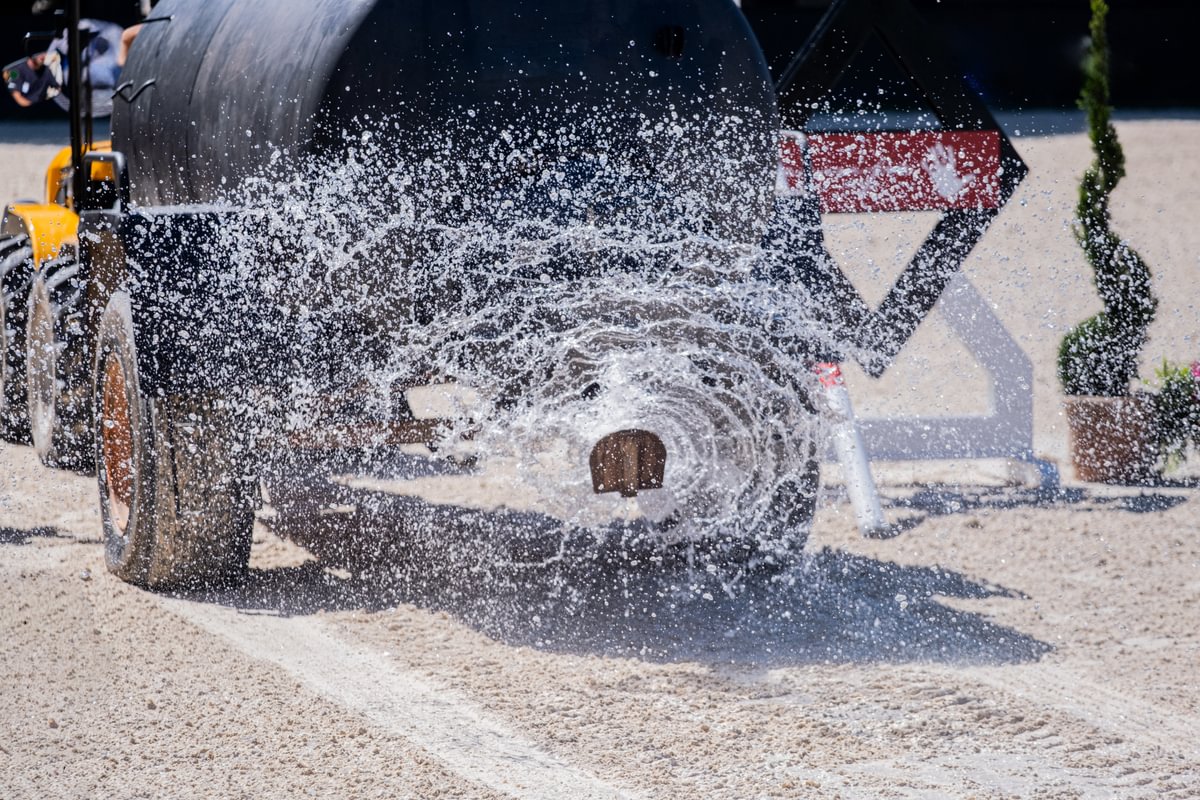
Moisture is one of the most important factors affecting arena performance. When a surface becomes excessively dry it can generate dust, lose stability, and become less consistent under hoof.
Maintaining appropriate moisture levels helps many surface types perform more effectively, particularly during warmer weather.
Water requirements will vary depending on:
- Surface type
- Arena location
- Weather conditions
- Frequency of use
- If additives such as fibre, wax, or rubber are present
Choosing the Right Arena Grader
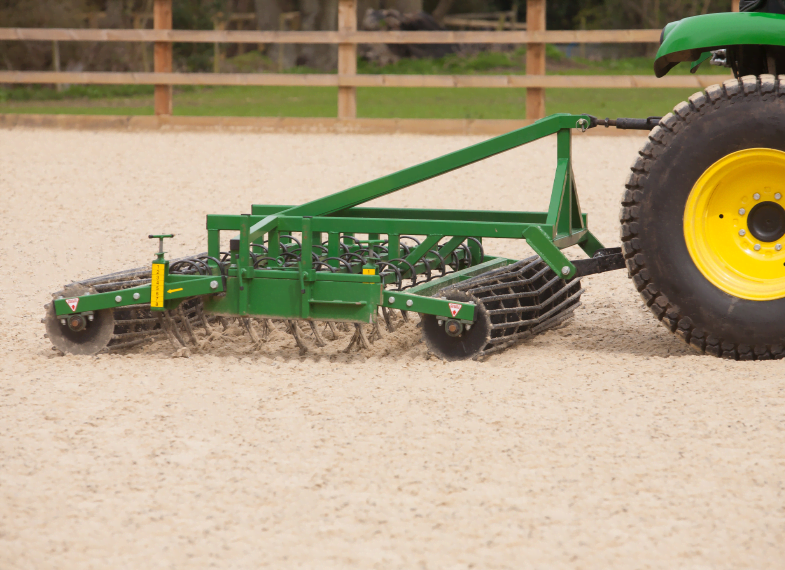
One of the most important investments you can make is selecting the correct maintenance equipment for your chosen surface. The right grader can significantly improve surface performance, reduce maintenance issues and help extend the lifespan of the footing.
Arena graders are typically available as:
- Tractor-mounted units
- Towable models
Most range between approximately 1.5m and 3m in width, depending on arena size and available machinery.
For both waxed and non-waxed surfaces, a suitable grader should ideally include:
Height-adjustable tines
Front and rear crumbler rollers
The ability to work at variable depths
A side or pop-out plate to pull material away from kickboards
These features help maintain a level, consistent footing while preventing material build-up around the arena edges.
When to Consider a Surface Top-Up
As riding surfaces age, it may become beneficial to replenish key materials to restore performance.
Common signs that a top-up may be required include:
Reduced cushioning
Surface instability
Visible reduction in fibre or rubber content
Inconsistent footing
Increased dust generation
Expert Advice from Day Equestrian
If you’re considering a surface top-up, refurbishment or material replacement, our team can provide practical guidance on the most suitable options for your existing surface.